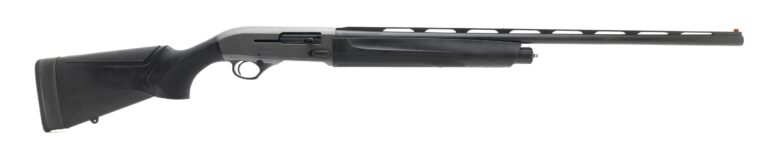
Home-Defence Shotgun: Pump or Semi-Auto, 12 Gauge or 20, and How to Set One Up
A shotgun is the traditional home-defence gun and still one of the best: simple, powerful at room distance, forgiving of imperfect aim, and inexpensive. It is also long, loud and heavier in recoil than a pistol, and a shotgun set up wrong for the person holding it is worse than a pistol set up right. This guide covers the choices that matter, in the order that matters: the action, the gauge, the barrel, the load, and where it lives.
Pump or semi-automatic
A pump shotgun is cheap, works with any shell and never depends on a load being powerful enough to cycle it. It requires the shooter to work the action between shots, which under stress is the thing people forget or short-stroke. A semi-automatic costs more, recoils noticeably less because the action absorbs part of it, and fires as fast as the trigger is pressed; a good one is reliable with full-power buckshot, and a cheap one can be fussy. For a household where one experienced person will use the gun, a pump is fine. For a household where a smaller or less practised person may have to use it, the reduced recoil and the absence of a pump stroke make a quality semi-automatic the better choice.
12 gauge or 20
Twelve gauge is the standard, and with reduced-recoil buckshot in a semi-automatic it is manageable for most adults. Twenty gauge throws about two-thirds the payload in a lighter gun with noticeably less recoil, and number 3 buckshot from a 20 is entirely adequate at room distance. For a small-framed or recoil-sensitive shooter, a 20-gauge is the right home shotgun and nobody should talk them out of it. A youth-stocked 20-gauge is often the best fit for a household with several possible users.
Barrel and stock
An eighteen-and-a-half or twenty-inch barrel is the legal minimum and the right length for a house; a field gun's twenty-eight inch barrel turns no corners. A cylinder or improved cylinder choke suits buckshot. Stock length matters more than in a rifle: a stock that is too long cannot be shouldered quickly, and a thirteen-inch length of pull suits most adults in a house better than the fourteen inches on a field gun. Many defence models ship short. Pistol-grip-only shotguns without a stock are hard to aim and harder to control; avoid them.
Capacity
Four to seven rounds in the tube is the normal range for a defence shotgun and is plenty. Extended tubes add weight at the muzzle. A side-saddle shell carrier on the receiver holds a few spares where they can be reached.
The load
Buckshot, not birdshot. Birdshot is for birds and does not penetrate reliably at room distance. Number 00 buck in 12 gauge and number 3 or 4 buck in 20 gauge are the standard defence loads; reduced-recoil versions exist in 12 gauge and are the right choice for the house. Pattern the gun at the longest distance in your house, usually seven to ten yards, and count the pellets on a silhouette. A load that keeps every pellet on the target at that distance is the one to keep in the gun. Slugs are for deer and for ranges a house does not have.
Sights and lights
A bead is adequate; a bright front bead or a set of ghost-ring sights is better; a red dot on a receiver rail is best and has become common. A light is worth more on a shotgun than on any other home gun, because a shotgun demands both hands and a handheld cannot be used; a forend-mounted light with a pressure area or a light on a clamp mount, activated with the support hand, lets you identify what you are pointing at. The rule from the pistol world applies: search with a handheld, and the shotgun's light is for the moment you have decided.
Where it lives
A long gun kept for the house needs a locking wall rack, a long-gun quick-access safe or a place in the main safe, with the chamber empty and the magazine loaded so that a pump of the action makes it ready. A shotgun leaned in a closet in a house with children is the arrangement that ends up in the news, and in several states it is a crime. The storage guide covers the hardware.
Practice
Fifty rounds of birdshot at a range teaches the mount, the pump and the recoil; a box of the defence load confirms the pattern and the point of impact. Dry practice at home, with the gun confirmed empty and the shells in another room, teaches the safe, the action and the light. Twice a year is enough to keep it.
Recoil and the smaller shooter
Recoil is what stops people practising with a shotgun, and there are four ways to cut it: a gas-operated semi-automatic, a 20-gauge, reduced-recoil buckshot, and a stock that fits with a good recoil pad. Use all four for a small-framed shooter and a defensive shotgun becomes pleasant. A youth-stocked 20-gauge semi-automatic with reduced-recoil number 3 buck is a gun almost anyone in the household can run, and that is the point of a house gun.
The alternative
If a shotgun's length and recoil are a problem, a 9mm carbine or a pistol with a light does the same job with less of both, and many households keep a pistol by the bed and a shotgun in the safe. The first handgun guide covers that choice.
Browse defence shotguns and 20-gauge shotguns in the catalogue, and see your state's storage rules on the city pages.
General information, not legal advice. Current as of September 2026. Laws change; check the official source before you act.